Christopher Nolan’s The Odyssey, civilizational collapse, moral order, the hero’s journey, and how stories like Homer’s epic survive.
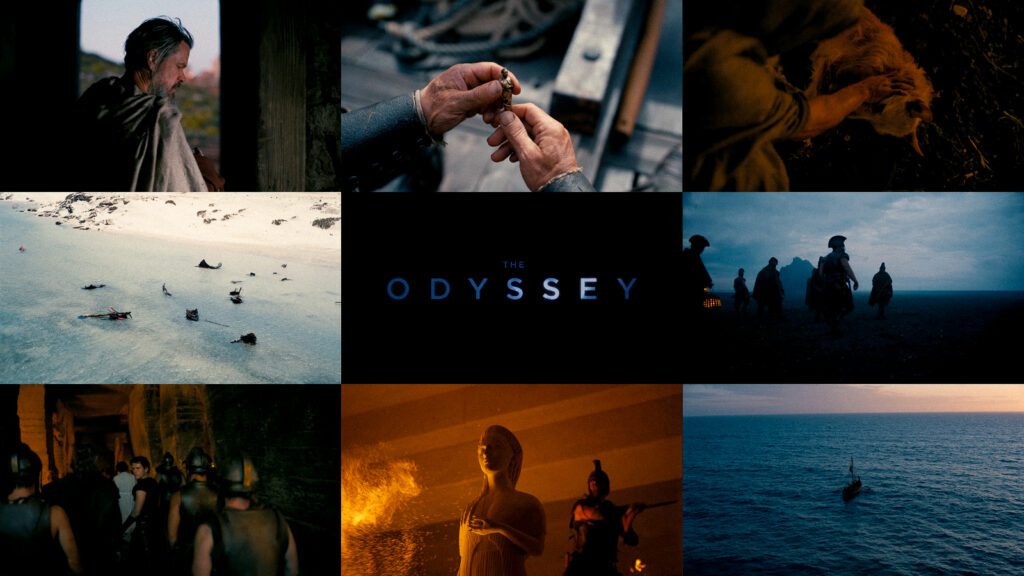
Late one Saturday night and well into the early Sunday morning hours at AMC Lincoln Square’s famed IMAX amphitheater (the biggest screen in the country, btw — just mentioning it in case you’ve never been informed by your friendly neighborhood movie podcaster), I sat in awe through the cinematic journey of Christopher Nolan’s epic The Odyssey, enthralled by the tales of monsters, magic, and men adrift on the high seas, weathering whirlpools and stormy seas churning with Poseidon’s fury.
By the end of the film’s ambitious three hour run time, I was left mulling over big things like the collapse of civilizations, the survival of ancient stories like Homer’s Iliad and Odyssey, the moral cost of victory, and pondering equally epic questions like what it means to find your way home after the life you knew has ended.Upon waking from the sensorial immersion of our cinematic journey into the heart of ancient Greece in 70mm IMAX, I found myself scratching my head as I tried to recall foggy details about the historical context of the original text from my World and European History classes in high school. After brushing up on some of my knowledge of the ancient western world, I came to the conclusion that the Odyssey isn’t just about one man’s long journey home. It’s about the justice of the gods, the failings of mortals — and the collapse of an entire civilization, as Odysseus alludes to in some of the film’s final moments.
While The Odyssey drifts into the realm of gods and monsters, the IRL history that grounds it is real. The Trojan War (circa 1200 BC) and its aftermath, which both Homer and Nolan’s epics focus heavily on, coincided with, reflected, or became entangled in more than a few seismic civilizational shifts that subsequently took place:
- Mycenaean Greece collapsed.
- Most major palaces burned to the ground.
- International trade fell apart.
- The population declined dramatically.
- Literacy disappeared for centuries.
What I didn’t remember from my high school World History class is that this period is what historians call the Late Bronze Age Collapse — one of history’s greatest civilizational disasters. As Odysseus embarks on a mythic journey of epic proportions, he’s also wandering the ruins of a dying civilization filled with fragmented kingdoms, chaos, disorganization, great upheaval, and declining literacy. And at the end, when Odysseus worries about what happens to a civilization’s stories once everyone who can still write them down is gone, he’s actually right to worry, because, for a time, the written word does disappear from much of the Greek world.
So, really, when you think about it, the fact that we still have this iconic story of heroism some couple thousands of years later is nothing short of a minor miracle.
The chain looks something like this:
➡️ Bronze Age events ➡️ civilizational collapse 🔥☠️⚔️
➡️ Oral poets preserve stories for centuries 🗣️
➡️ Homer (or the tradition we call Homer) shapes them into epic poems that later Greek scribes write down 📜
➡️ The Roman scholars who inherit the remains of Greek arts, culture, and knowledge preserve them
➡️ Monastic libraries and Byzantine Christian scribes (some of the few literate humans remaining in Western Civilization after the collapse of the Roman Empire) copy these historical writings and manuscripts during a dark age of widespread illiteracy during the Middle Ages 🕯️ ✝️ 🙏
➡️ Renaissance humanists rediscover ancient manuscripts and totally geek out
➡️ The invention of the printing press in 1440 allows for widespread replication and distribution 📖
⏩ Time jump / smash cut to me sitting in a sold-out showing of Chris Nolan’s movie in the Lincoln Square IMAX while I chow on Nerds Gummy Clusters and Diet Coke at 1:00 AM … And, darn it, I think that’s beautiful.
There are so many cracks and fissures throughout history into which stories like The Odyssey might simply have vanished forever if not for storytelling tradition. Odysseus lived to see Matt Damon play him only because of the miraculous unbroken chain of spoken word poets and singing storytellers who committed hundreds of thousands of words to memory, and, later, the monks, historians, and humanists who transcribed and preserved those words. Because all those generations of ordinary people refused to let the story die, we’re still discussing it over 3,000 years later.
And the questions that arose for me upon watching Odysseus’s quest unfold thousands of years later still feel universally relevant, because they are questions about human nature and the cycles of violence, war, and shifting tides of power that play out over and over and over again. Questions like: How much violence can a society absorb before it changes permanently? Can heroes return from war unchanged and unbroken? Can deception and trickery go unpunished? Are our collective and personal misfortunes simply manifestations of the gods’ anger? Do the gods punish civilizations for mankind’s fallibility, for our wickedness and brutality?
We can ask these questions about Ancient Greece, the Roman Empire, Medieval Europe, the Crusades, the World Wars of the 20th century, and of today, which is probably why Homer’s tale still feels eerily contemporary, and why stories about brave heroes like Odysseus who continuously endeavor to do the right thing while overcoming tremendous hardship still resonate with us today.
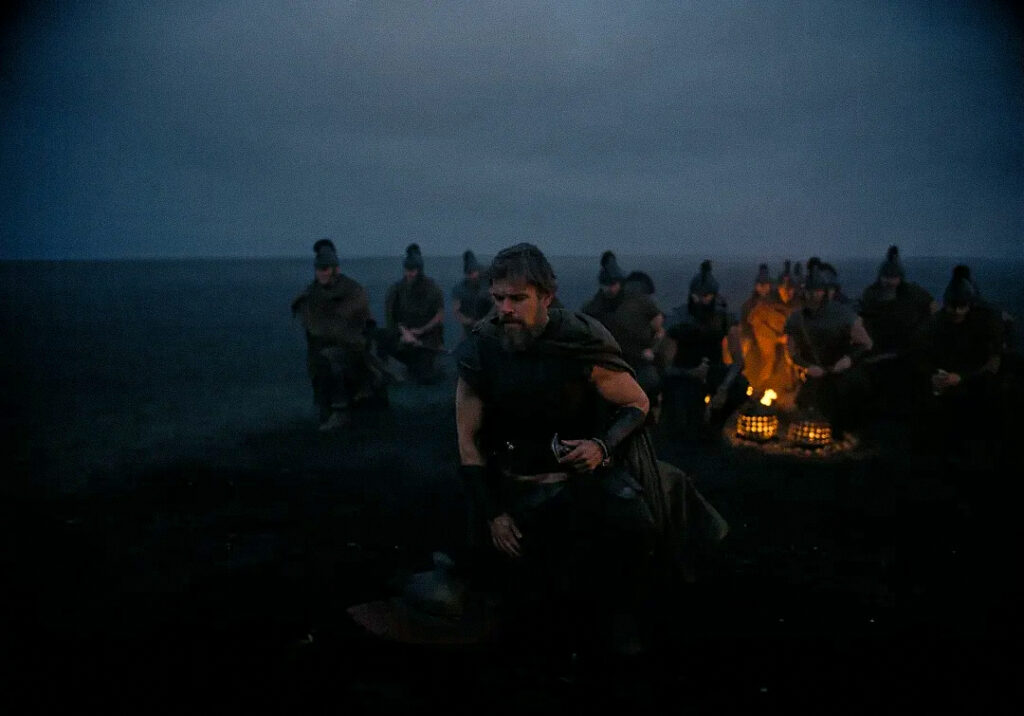
Like the raging sea and the strange and unusual creatures and folks who inhabit the rocky islands scattered across the vast ocean that Odysseus must navigate to get home, the pagan gods of ancient Greece feel materially present in the film. Odysseus and his men truly believe that they are being punished — or, at least, that Odysseus is, and that they’re all getting screwed over thanks to the curse he brought upon their journey home by invoking the wrath of Poseidon.
The gods of The Odyssey may be jealous, temperamental, and morally inconsistent, but the universe they inhabit is not without a strict code of moral order, and they don’t hesitate to punish Odysseus and his men. Evil is not characterized as some abstract, external force that spawns at the gates at random; it’s inherent, dwelling in human appetite, pride, cowardice, entitlement, deceit, and greed.
We see this deception and hedonism at work not only with the sack of Troy and the abominable behavior of the “guests” who act as an occupying enemy force in Odysseus’s house. The suitors are not simply rude houseguests who have overstayed their welcome; they essentially render Penelope and Telemachus prisoners in their own home, captive to their own good will and adherence to sacred tradition that mandates receiving guests with generous hospitality. The suitors exploit that goodness for their own gain, feasting greedily on another man’s food, occupying another family’s home, threatening another man’s son, and behaving as though they are entitled to every bit of Ithaca’s food and drink and material resources simply because they decided to show up (uninvited) and set up camp.
Their corruption is distilled perfectly when Odysseus returns to his kingdom at long last, cleverly disguised as a beggar, and interrupts the merrymaking at a raucous, rowdy feast held within his palace halls to implore some of the men occupying his home for something to eat. Robert Pattinson’s character refuses to spare him even a bread roll, prompting Odysseus to point out that the food is not even his to withhold. It’s a small moment, but it says everything: the suitors have benefited from Ithaca’s generosity so immensely and for so long in Odysseus’s absence that they have become gluttonous, greedy, and entitled to that which was never theirs to begin with.
The suitors fail the “beggar” Odysseus’s test because they cannot recognize dignity without status. They can only understand power once it is strong enough to punish them.

The interlopers also show their true character as they plot to kill Telemachus and exhibit needless cruelty towards Odysseus’s trusted groundskeeper, Eumaeus, and to Odysseus’s elderly hunting dog, Argos.
Argos is cruelly kicked aside and banished outdoors to the manure heap by the interlopers overrunning and plundering his home. When Odysseus finally returns in disguise, the dog expends the very last of his sapped strength on one tiny, helpless tail wag to greet his master before his soul departs from the mortal world. It is a tender moment, made even more so by the fact that it is through Argos’s recognition of Odysseus that Telemachus finally confirms what he may have already suspected. He recognizes his father through the recognition of the loyal pet who never forgot him has been waiting for him all this time.
In the original text, after he returns and drives out the intruders, Odysseus resumes his role as ruler in Ithaca when his perilous odyssey comes to an end. But Nolan gives Odysseus and Penelope a slightly different ending, in which they set sail to chase the setting sun beyond the horizon, into the unknown West.
I couldn’t help but think of the ship bound for the undying Grey Havens at the end of The Lord of the Rings. Both endings reflect a similar sentiment: sometimes you can’t go home again, and some wounds can never be truly healed.
“‘Alas! there are some wounds that cannot be wholly cured,’” says Gandalf at the end of the Return of the King. Frodo concurs.
“‘I fear it may be so with mine … There is no real going back. Though I may come to the Shire, it will not seem the same; for I shall not be the same. I am wounded with knife, sting, and tooth, and a long burden. Where shall I find rest?’”
J.R.R. TOLKIEN, THE LORD OF THE RINGS: THE RETURN OF THE KING
In LOTR’s case, the departure of Frodo, Bilbo, Gandalf, and the Elves is a solemn occasion in remembrance of all that was lost; the heaviness of the burdens that were carried; the ache of old wounds. Ultimately, though, it’s triumphant: the world is saved from tremendous evil.
In The Odyssey, on the other hand, the world seems destined for certain doom, having failed to uphold Zeus’s law. Still, though, it’s a somewhat optimistic ending as Penelope and Odysseus set off at the sunsetting of an age: Odysseus crowns Telemachus as his successor, leaving Ithaca’s rule in the hands of the next generation. Similarly, in The Lord of the Rings, a world-weary Frodo leaves his legacy behind in the stewardship of the brave and loyal Samwise Gamgee, on whom he is counting on to continue living life to the fullest, sow the seeds of the next generation, and tell the story of the Fellowship that saved the world from the fires of Mordor.
In both tales, the wounded heroes sail west, while the faithful stewards remain and keep the hero’s story alive. Civilizations fall, but the story remains to teach the next generation what must be remembered and perhaps painstakingly rebuilt.
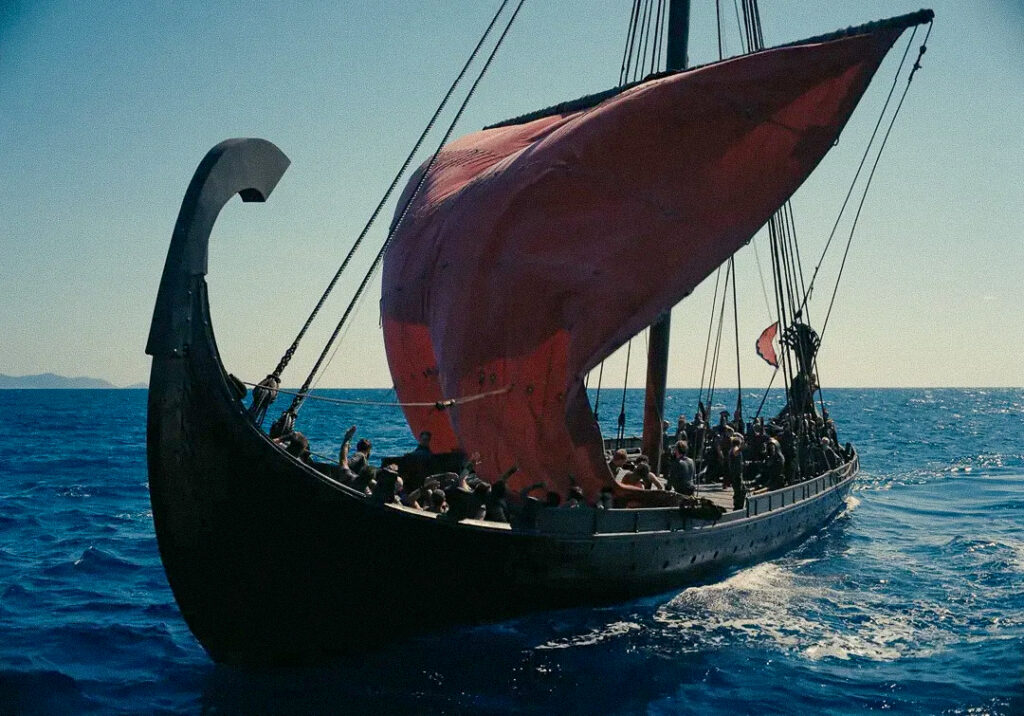
Even though I more or less knew the twists and turns of the quintessential hero’s journey from what I remembered of the passages I read in my high school English class, and from the bits and pieces Dillon narrated to me while reading a translation of Homer’s tale over the summer, more than a couple of sequences had me covering my eyes, squirming in my seat, mouth agape in wide-eyed horror. (If you’ve seen Nolan’s Odyssey already, you probably know the ones I’m talking about; as an aside, I feel it’s worth noting one of the most interesting behind-the-scenes facts that I came across while researching this article, which is that no CGI was used for the scene with Odysseus’s men chowing down on slop soup in Circe’s hut.)
The film flows in seamless tidal rhythm thanks to some incredible performances by the lead and supporting cast. Matt Damon shook me, Anne Hathaway surprised and delighted me, Robert Pattinson legitimately pissed me off (in a good way), Zendaya haunted me (also in a good way), and Tom Holland and Jon Bernthal made me giggle, having just seen them (plus Zendaya!) onscreen together Spider-Man: Brand New Day (… do we maybe need more active movie stars in Hollywood, guys?).
If one thing is made clear by watching The Odyssey in its full 70mm IMAX glory, it’s that Nolan didn’t want audiences to simply observe a dusty literary classic through smudgy museum glass. He wanted to draw us in, to make us feel frightened, adrift, battered by wind and waves and morally implicated alongside the film’s characters.
By the end, that feat is certainly accomplished; shot on-location entirely in IMAX, The Odyssey makes the ancient world feel materially present. The use of real boats battling waves on the real high seas sweeps you up into the drama, immersing entire theaters full of people in tumultuous surf and salt air. Leaving, I felt wind-battered, bedraggled, salt-worn, and about a decade older, punished by Poseidon’s sea and lucky to be here in the year Two-Thousand and Twenty-Six, in the same time as an artist like Christopher Nolan, and modern marvels like the towering IMAX screen at AMC Lincoln Square 13.