There’s something ironic yet perfect about seeing Wuthering Heights on Valentine’s Day weekend, a holiday devoted to romance and roses and mythologized love stories. Naturally, we decided to spend our Valentine’s Day Eve on the windswept Yorkshire moors watching two people emotionally destroy each other for two hours.
In the spirit of romance (and rigorous marital discourse), we’re offering this review as a His & Hers: Same movie. Same popcorn. Slightly different interpretive lenses. What happens when a literary romantic revisits Brontë’s most infamous couple through the prism of adulthood and healthy marriage… and a skeptical husband watches a theater full of people cheer for mutually assured annihilation? Below, our perspectives diverge, occasionally overlap, and ultimately circle the same uneasy conclusion: this is not the love story you think it is.
Let’s start with Hers.
Hers (Erin’s Version)
Emily Brontë’s dark, emotionally gutting 1847 novel Wuthering Heights has seen many adaptations attempt to capture the tortured intensity of childhood-playmates-to-soulmates Heathcliff and Cathy’s ill-fated romance. My personal favorite, albeit imperfect, is probably the 1992 adaptation starring Ralph Fiennes and Juliette Binoche, which more faithfully followers the narrative structure and complete multi-generational span of the novel than the newly released 2026 adaptation.
The new “Wuthering Heights” takes significant liberties, including anachronistic costuming, unrestrestrained sexualization, unbridled lustiness, and near-constant thinly veiled sexual innuendos, not to mention a huge overhaul of the plot that streamlines the multi-generational familial saga by erasing the characters of Cathy Linton and Hareton Earnshaw, among others.
However, in spite of the loose interpretation that “Wuthering Heights” functions as, this latest reimagining brilliantly capture the emotional intensity and yearning of the literary classic. Like Emerald Fennell, director of the 2026 “Wuthering Heights” film adaptation, I first read Ms. Brontë’s novel as a teenager, and it struck me, too, how tragically romantic, intensely heartbreaking, and cathartically devastating it is. It is part love story, part ghost story, part psychological excavation of codependency and obsession, as melancholic and misanthropic as the dark, brooding, and cruel Heathcliff. But, for me, adulthood and the experience of a healthy relationship and marriage changed the emotional resonance of Cathy and Heathcliff’s ‘romance’ upon revisitation.
The choice to market the movie with a Valentine’s Day release and position it as one of the great love stories of all time was certainly an interesting one, and one I couldn’t help but wonder at as I heard the cheers of women in our screening’s audience cheering wildly at Healthcliff’s return (now with a single gold hoop earring) after years away.
The original work makes it clear to anyone familiar with it that Cathy and Heathcliff are not role models. Their bond is not aspirational. It is obsessive, possessive, destructive. Both characters are selfish, cruel, and manipulative at turns. Cathy is haughty, contemptuous, and something of a spoiled brat, in spite of not being as rich as her new neighbors and eventual in-laws, the Lintons. Heathcliff is not just a brooding bad boy, but a violent and ill-tempered brute. Together, they are toxically codependent and destructive not only towards themselves but towards everyone around them, who end up becoming collateral in the wake of their reckless obsession with one another.
And yet….
There is something undeniably powerful about the way they recognize themselves and their very souls in one another. Cathy’s declaration that she “is Heathcliff,” has always felt less romantic to me and more existential. They are not in love in the way stable, grounded adults are in love. They are ego entwined with heedless longing, and the heavy sense of impending catastrophe when Heathcliff returns is ultimately part of the draw of both the book and Emerald Fennell’s new film.
Even viewers who aren’t familiar with the source material must know that there can’t possibly be a happy ending after Cathy’s acceptance of Edgar Linton’s proposal and her subsequent declaration that it would degrade her to marry Heathcliff. Wuthering Heights is, after all, not a blueprint for love; it’s a study of what happens when desire and obsession outpace and overpower wisdom.
True love, the kind that lasts, protects and builds; it is steadying, grounding, and wondrously light. It doesn’t require mutually-assured annihilation. Heathcliff and Cathy don’t fail to find a happier ending because they love too intensely or because they’re cut from the same cloth, or even because they were ripped apart by the fates — after all, Cathy makes a conscious, practical choice to pursue and marry Edgar Linton.
Overall, I enjoyed this movie a LOT more than I thought I would; based on the trailers and the charli xcx soundtrack (another pleasant surprise), I anticipated sitting through something more closely resembling Sofia Coppola’s emotionally hollow but visually intoxicating Marie Antoinette. That being said, though, it’s more Wuthering Heights “vibes” than Wuthering Heights™.
While the film’s decision to streamline the multi-generational arc undoubtedly makes for a cleaner, more accessible narrative, it ultimately diminishes the psychological architecture that makes Brontë’s novel so profound and enduring. In the book, the second generation is not ornamental; it is redemptive. By erasing Hindley, Linton Heathcliff, Cathy Linton, and Hareton Earnshaw, and the slow moral evolution that follows Heathcliff and OG-Cathy’s destruction, the adaptation collapses the story into pure tragedy, flattening Brontë’s masterful meditation on inheritance, consequence, and the possibility of repair.
Similarly, simplifying Isabella’s familial ties and folding Hindley’s role as chief tormentor and the driving force behind the Earnshaw estate’s initial descent into ruin and shame into the elder Mr. Earnshaw’s character in the 2026 film removes key pressures that shaped Heathcliff’s transformation from wounded child to calculated tyrant. What remains is emotionally intense, yes, but leaves audiences with a conclusion that feels jarringly unfinished and extra depressing.
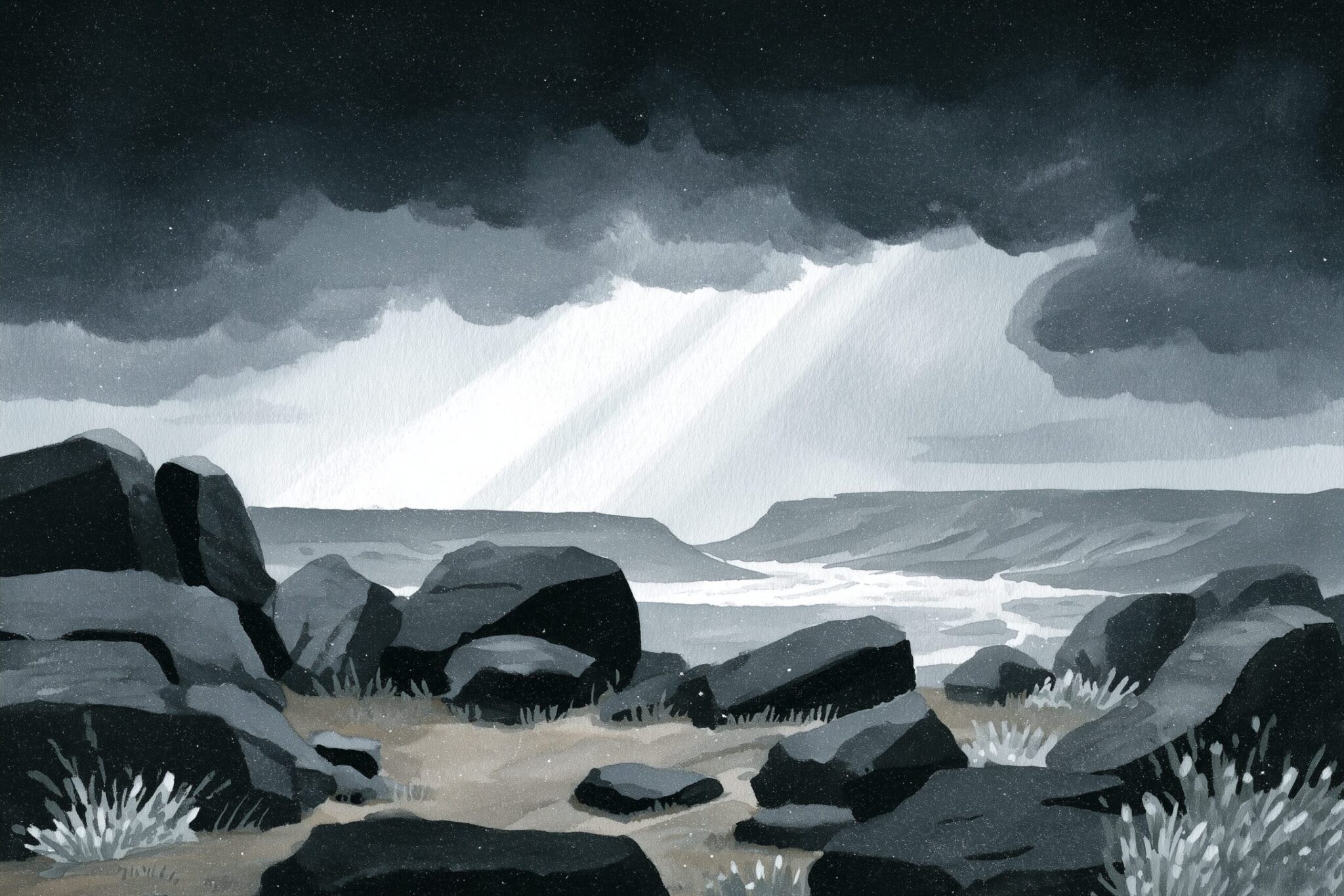
Still, it’s a treat for the eyes and for any old soul that loves sad songs and heartbreaking books with deliciously depressing endings. “Wuthering Heights” may be significantly different from the book, but, atmospherically, it is definitely “giving” Wuthering Heights gloom, albeit a rather steamier, glitzed-up, airbrushed, Hollywood-packaged cellophane version. The vast, treeless expanse and punishing winds of the Yorkshire moors is not just a backdrop; it creates the atmospheric architecture critical to the story’s emotional climate. The moors blur boundaries between houses, between classes, and, in Emily Brontë’s classic work, between the living and the dead, reinforcing the novel’s preoccupation with liminality and isolation. Their exposure heightens vulnerability; their openness suggests both freedom and desolation. In this way, the landscape becomes an actor in the narrative, rendering the story’s emotional extremes not melodramatic, but wild and elemental.
Ultimately, Wuthering Heights is not a love story. It is a warning, and a timely one at that: in a world that tells us we deserve everything we want, this story reminds us that obsession without restraint can consume everything, and that desire, entitlement, and even years of yearning and painful pining do not justify destruction.
His (Dillon’s Version)
2026 has already started off with a bang, with Sam Raimi’s Send Help providing the perfect amount of thrills and dark humor, followed by “Wuthering Heights” this Valentine’s Day weekend, transporting us to the craggy, gloomy Yorkshire moors in the 1800s for what will undoubtedly be one of the nicer surprises debuting onscreen this year.
Filmed on location in the Yorkshire dales of North England, this film has a way of immersing the viewer in the sweeping, dramatic landscape, the scenic rolling green hills juxtaposing wonderfully with the Earnshaws’ (later Heathcliff’s) remote, lonely, storm-weathered estate of dark and dreary mountain rock.
A true tragedy of a love story, the chemistry between the characters are what drives this movie, with Jacob Elordi and Margot Robbie delivering powerful performances.
Heathcliff and Cathy are fast friends, quickly becoming inseperable when Heathcliff is brought to Wuthering Heights as the lost, listless, and illiterate “adopted” ward of Catherine’s father. The child actors who played Heathcliff and Cathy do a phenomenal job setting the stage for their romantic evolution, as Elordi’s grown-up Heathcliff falls hopelessly in love with Robbie’s Cathy. What unfolds is less a romance and more a cautionary tale of co-dependency and manipulation.
Cathy is affectionate toward Heathcliff, but she treats him like a puppy-dog or plaything, something to be molded into whatever shape best flatters her. She loves him, but she never hesitates to weaponize his devotion. Heathcliff, for his part, willfully absorbs mental and physical abuse to protect Cathy.
Meanwhile, Cathy aspires to more, and the fortuitously timed arrival of their wealthy new neighbors at Thrushcross Grange — Edgar and Isabella Linton — present the perfect opportunity. Cathy believes she belongs in high society — velvet upholstery, shining jewels, silk garments, expensive china. When Edgar Linton offers that life, she chooses status over loyalty, marrying into aristocracy while clinging emotionally to Heathcliff.
So begins the cautionary tale of discontentment with the present and allowing our past to dictate our future. When Heathcliff returns many years later, he has a new haircut and a little gold hoop earring and has climbed in status by amassing himself a fortune of mysterious origin, but, on the inside, he’s battered, bruised, and broken by the mental sticks and stones thrown at him by Cathy during his formative years.
Wishing for revenge and a second chance to steal what he believes is rightfully his, he purchases Wuthering Heights and hangs over Cathy and her newfound family like a black cloud cresting over the hillside.
Heathcliff’s self-loathing and self-destruction is matched only by the narcissism and eternal toddlerism of Cathy, who resumes teasing and tormenting him immediately upon his return, in spite of her marriage to Edgar and a life that would probably be the envy of 99% of the British population at the time. Cathy has a doting husband who treats her like a queen and will do anything to make her happy, staff who takes care of her every need, and a baby on the way, but still falls prey to romanticized nostalgia and the false belief that she can — and should — have it all.
So, in an effort to destroy herself and all of those around her, she chooses to stay with her husband while concocting a secret trist with Heathcliffe behind closed doors. This goes on for some time until the nanny/maid, Nelly, informs Mr. Linton that he is being cucked.
Ultimately, Cathy goes out the way she started, selfishly and childishly. The co-dependency of the co-leads was ultimately their undoing, as they both leech every last ounce of blood out of the other on the way to their mutually-bound destruction. Cathy played the role of Dr. Frankenstein, molding her pet monster to her liking, turning Heathcliff into a vampire-like wretch, lurking in the shadows and taking everything from his victims along the way. In the end, Cathy and Heathcliff both degraded each other, and neither could live while the other survived.
I’d be remiss if I didn’t mention one of the most fascinating studies in human behavior and psychology ever witnessed, when Heathcliff first returns to Cathy and seemingly the entire audience at our February 13th showing burst into rabid cheers and applause. Now, to be clear, at this point in the movie — and especially if you’ve read the book, my wife assures me — we know exactly who Heathcliff is, and that any kind of romantic rekindling between the two at this point would be guaranteed to be disastrous, not to mention adultrous. Together, they are a whirlwind of selfishness that lashes anyone unlucky enough to be around them. I actually remember turning to my wife about 40 minutes into the movie proclaiming that I hate both of these characters with a passion, and she remarked in agreement that they are not necessarily meant to be sympathetic characters.
Despite that, when Cathy first reunites onscreen with Heathcliff, our theater’s audience (mostly women) erupted into the kind of an ecstatic frenzy you might expect from someone whose NFL team just won its first Super Bowl. This made me ponder the modern appetite for the archetypal ‘bad boy’ and the drama of doomed relationships — the intoxicating rush of temporary fun and dopamine, followed by an inevitable and wholly foreseeable crash into despair and chaos. Our fellow moviegoers clapped gleefully at the prospect of Cathy throwing away the stability of her life with Edgar (with a baby on the way, no less) to dive headlong into a pattern of turmoil and infidelity. It was fascinating to watch an audience vociferously celebrate a choice so clearly primed for self-destruction. Unfortunately, to fully examine the psychological implication of this reaction would require more space than the confines of this review allows.
What struck me most, though, was the insatiable narcissism running like a virus through nearly every major character. Heathcliff’s obsession, Cathy’s entitlement, Isabella’s willingness to knowingly enter misery for the allure of proximity to passion — even Nelly’s manipulations for her own comfort — all contribute to the tragedy. Each character, in different ways, chooses pride, desire, or vengeance over wisdom and restraint.
Overall, Wuthering Heights is less a love story and more a stark portrait of human nature — of what happens when entitlement eclipses responsibility and obsession overrides reason. Heathcliff does not deserve applause. Cathy does not deserve romantic canonization. Their story endures not because it is aspirational, but because it is a warning.
And in 2026, that warning feels particularly timely.