July 4th, 2026, marked two hundred and fifty years of American independence and innovation, and we could think of no better way to mark the yearlong celebration of our nation’s 250th b-day than by paying a visit to its capital city earlier this summer, just in time to witness some of the set up for a slate of summer events honoring our history and the heroes who shaped it.
The trip made me think, as I often do, about just how much has changed since I last properly visited Washington, D.C., which was waaaaaay back in high school for an AP U.S. History trip. I remember marveling at the monuments and pausing in front of memorials with quiet reverence. In spite of the fact that it wasn’t all that long ago, in the grand scheme of things, this was a different world than the one we live in now; a more ‘united’ United States before every expression of patriotism was met with supercilious snark.
Maybe I’m just another hapless victim of romantic nostalgia and am consequently idealizing the patriotism that felt commonplace when I was in high school, but I do know this for certain, because it’s enshrined in my memory: the culture of my youth wasn’t anywhere near as openly hostile towards expressions of patriotism as it is now. I know I didn’t dream up the memory of American flags waving proudly on almost every doorstep, or saying the Pledge of Allegiance in class every morning. Before the calculated rebrand of American patriotism to the more ominous, authoritarian-sounding “Christian Nationalism,” I remember a childhood and adolescence and even undergrad days where it was more than okay to like or even unabashedly love your country, to root for Team USA in the Olympics, to don American flag-themed apparel on the Fourth of July.
When did that kind of patriotism become embarrassing? Or, worse still, suspect, even evil?
In my three decades of life, I have watched love of country become increasingly entangled with labels, assumptions, and partisan suspicion. Patriotism is often discussed as if it were merely a disguise for something darker, rather than a natural affection for the place, people, and principles that formed us, where we were either serendipitously born or came to by choice in search of a better quality of life and more abundant economic opportunities, as many immigrants and children of immigrants have throughout our history. Now, my husband and I are known as the openly “patriotic” ones in his group of friends — and, trust me, I know it’s not meant as a compliment. That strikes me as strange, especially given how much many Americans — including us — have been fortunate enough to inherit, particularly in contrast to the freedoms
Gratitude does not require pretending that the United States is beyond reproach. No country is. Our history contains grave injustices, moral failures, and promises still unfulfilled. But perspective matters, too. We enjoy freedoms and protections denied to countless people throughout history and around the world. For me especially, as a woman, that includes the freedom to speak, dress, work, worship, and shape my own life in the way that I want to without state-sponsored subjugation. Acknowledging those blessings does not erase America’s failures, nor it does not necessitate that every acknowledgement of thanks come with a caveat or apology tacked onto it. It’s actually okay to love America; in spite of not being a utopia (again, what country is?), it remains unmatched — hence the overwhelming global appetite to come and live here, and perhaps the refusal to leave of the many citizens and non-citizens alike who love to preach unceasingly about all the countries they prefer over the one in which they have chosen to live.
All of this weighed on my mind as we walked in the footsteps of 250 years of our nation’s great (and some not-so-great) leaders, beholding brilliant limestone monoliths and statues erected in tribute to virtues like truth, justice, and faith. Walking the National Mall, I could feel the weight of our country’s checkered-yet-triumphant, storied past all around. That spirit felt especially present on the weekend preceding Memorial Day, a federal holiday reserved to commemorate our freedom and what it cost, and even more so as we mark the official kickoff to a summer of celebration in honor of America’s two-hundred and fiftieth anniversary.


Every American – born or otherwise – inherits a country they did not create. A nation’s people inherit its triumphs and its failures, its virtues and its flaws, its achievements, and its unfinished work. The question is not whether that inheritance is perfect (once again, it’s worth mentioning that no nation on Earth has a claim to that kind of moral purity); the ultimate question, really, is whether the American people today collectively possess the gratitude, humility, and courage required to steward it well.
All that sentiment is hokey, sure — perhaps on par with a bald eagle shedding a single manly tear as a tattered, battle-worn star spangled banner waves proudly in the background. But it’s also true. Freedom is not self-sustaining. Nor, for that matter, are foundational cornerstones like civic trust and national identity, no matter how abstract they may feel to generations who have sacrificed nothing, and suffered nothing. Every generation must work together to decide whether to continue chipping away at (at times even straight up setting fire to, sometimes quite literally) the inheritance it has received, or to contribute something meaningful to it. We are temporary custodians of a story that began long before us with the vision of the Founding Fathers, tending to a flame that will hopefully endure long after we’re gone. The responsibility of citizenship is not simply to enjoy the blessings of liberty and the many privileges that come with it, but to ensure those blessings remain available to those who come after us.
A City Built to Remember
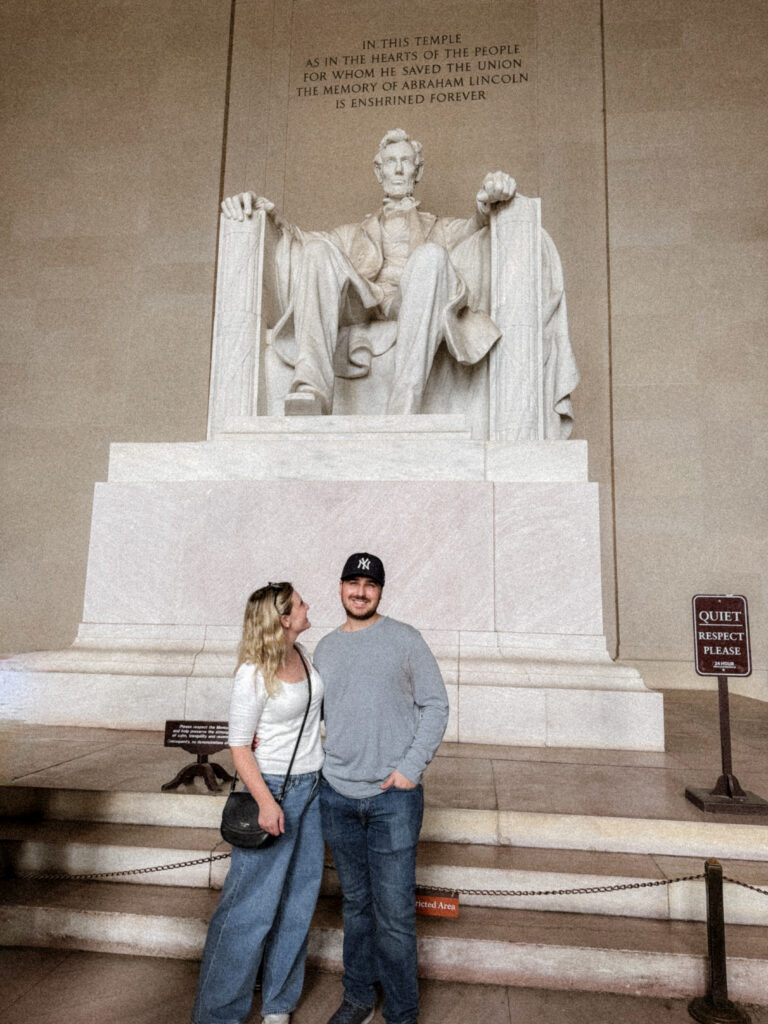
Visiting Washington, D.C. was a powerful reminder of the shared history that shaped the nation in which we live. Every building, every thoughtful, classically-inspired detail, feels like a dedication to the U.S. of A. and our commitment to truth, justice, and liberty. It was my husband’s first time visiting Washington, D.C., and it was truly a joyous occasion watching him experience, for the first time, the unfurling tapestry of a city built for the express purpose of recognizing and honoring our nation’s past while serving its people in the present (a mandate, it’s worth remarking, that often goes unfulfilled). The limestone and marble monuments, carefully preserved archives, and immersive museum exhibits scattered throughout Washington are reminders that the United States did not emerge fully formed from enchanted earth, and it certainly didn’t come into being by mere chance. It was built, defended, improved, and preserved by countless ordinary and extraordinary people who believed that the freedom and prosperity of future generations were worth sacrificing for.
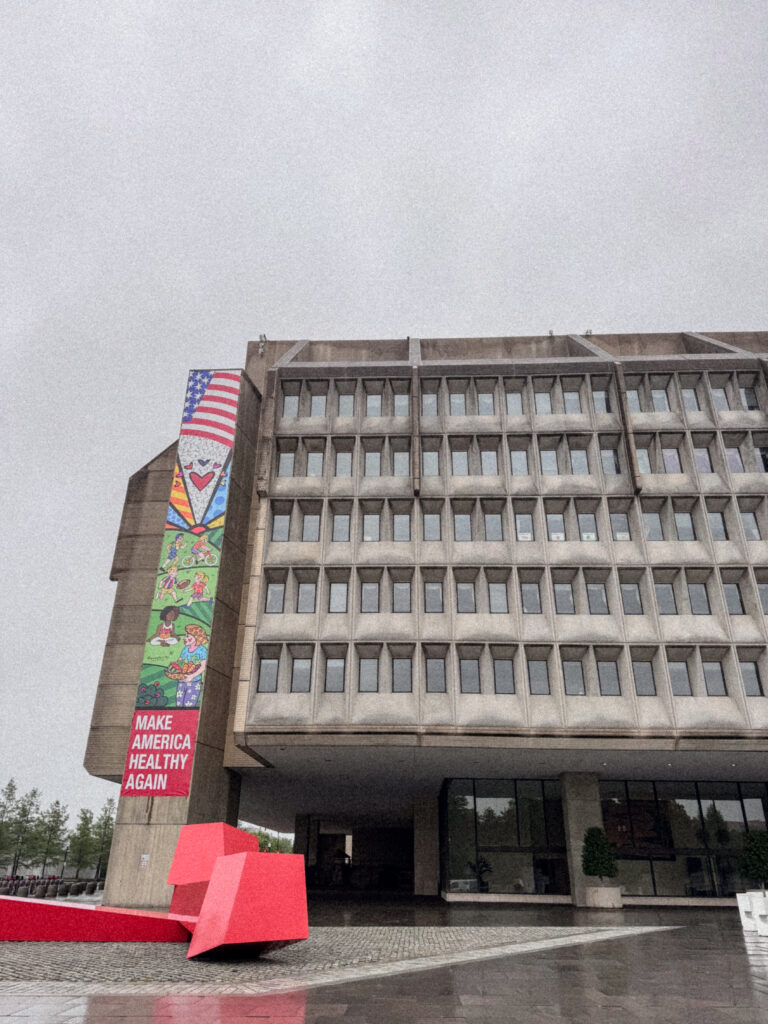
Dillon best described it as, “a living museum and theme park dedicated to the glorious history of the greatest Country on Earth, where everywhere you turn represents another page in our epic story”, with lush green parks and winding pathways to guide you. In tandem, the trifecta of the stately lawns and pillars of the White House, the prestigious and dignified Supreme Court, and the majestic halls of Congress found inside the gleaming ivory Capitol building represent the branches of governmental power and checks and balances intended to serve the American people. From the labyrinth of thoughtfully designed federal departmental buildings, to the epic and timeless Lincoln Memorial, to the numerous somber and powerful war memorials and the larger than life obelisk of the Washington Monument pointing heavenward, there are endless reminders of the grand experiment and legacy of the USA.

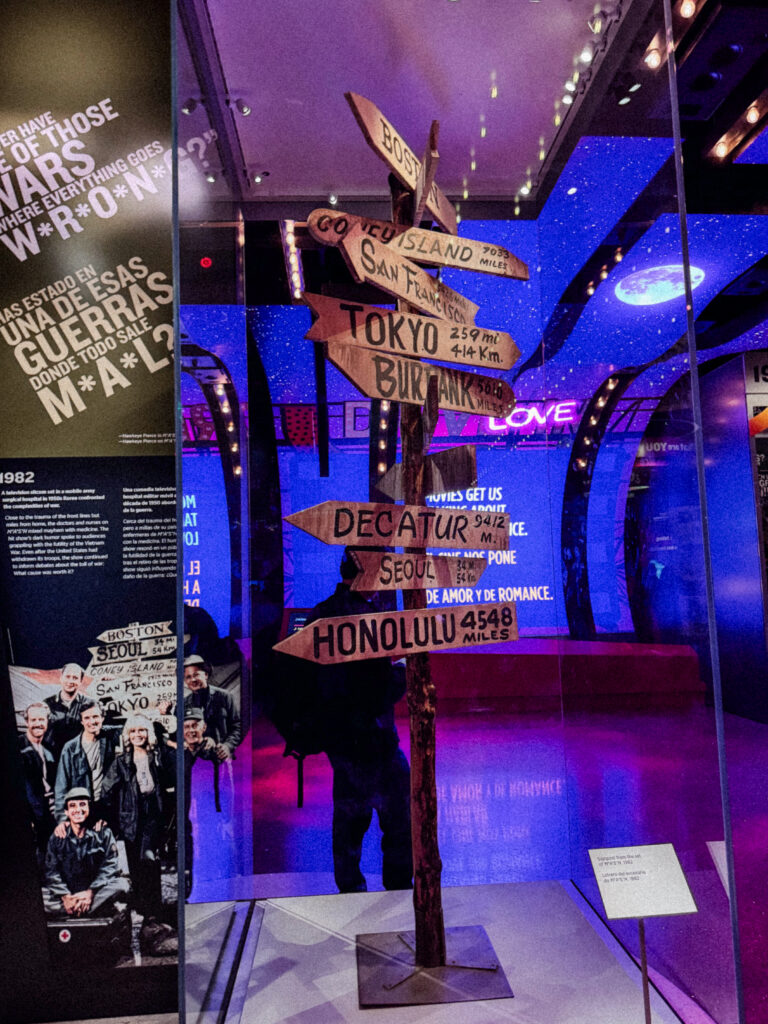

The city’s many (and mostly free!) museums are also top tier and phenomenal in their own right. The Smithsonian’s National Museum of American History (since it’s de-wokeification) is like walking through a living scrapbook of history. It’s a vast collage that transports visitors into the chapters of American history and its many multitudes of complex phases and cultural moments, both before and after the Revolution that sanctified its founding as an independent nation. We loved taking this educational stroll through history that spanned several floors, from the muskets of the Revolution to the dawn of refrigeration, to massive steamboats and modern technology like personal laptops and beepers and iPods, we were humbled and amazed at the inventive and pioneering spirit of our ancestors.
The Smithsonian’s National Air and Space Museum Air and Space Museum was another delight, displaying combustion engine flying contraptions dating back to the days of the Wright Brothers, nuclear warheads, small jets, rocket ships bound for the rocky craters of the Moon — and even an X-wing straight out of the world of Star Wars, co-piloted by none other than R2-D2 himself. There’s a little bit of something for everyone here.
Finally, we’d be remiss if we didn’t mention the Smithsonian’s delightful National Zoo, which is home to some magnificent and rare creatures, like the pair of legendary and playful Giant Pandas, Bao Li and Qing Bao, (representative, also, of international cooperation with the People’s Republic of China), whom you’ll probably find snacking lazily on bamboo. There are curious Asian elephants; iconic animals entwined with our history along the American Trail; lions with flowing manes and commanding roars; and the mystical-looking binturong, whose shaggy tail is almost as memorable as its uncanny buttered-popcorn scent. If you love animals, the National Zoo is not to be missed!

What We Choose to Carry Forward
The monuments, archives, museums, and exhibits of Washington, D.C. remind us that the United States did not emerge fully formed from uniquely enchanted earth, nor did it come into being by chance. It was built, defended, improved, and preserved by countless ordinary and extraordinary people who believed the freedom and prosperity of future generations were worth sacrificing for.
Patriotism does not require blindness to our shortcomings or to the blights on our past. Mature love is not blind. It sees clearly, tells the truth, and remains committed to the good. We can condemn injustice without despising our country. We can honor what our ancestors built without denying the extraordinary inheritance already placed in our hands. The choice before us now shouldn’t have to be between worshiping America and hating it, but choosing stewardship, clarity, grace, and gratitude over shame and apathy.
As we continue to celebrate America’s 250th anniversary this year, I pray that we choose gratitude over cynicism, stewardship over neglect, sacrifice over selfishness, and wisdom over arrogance.