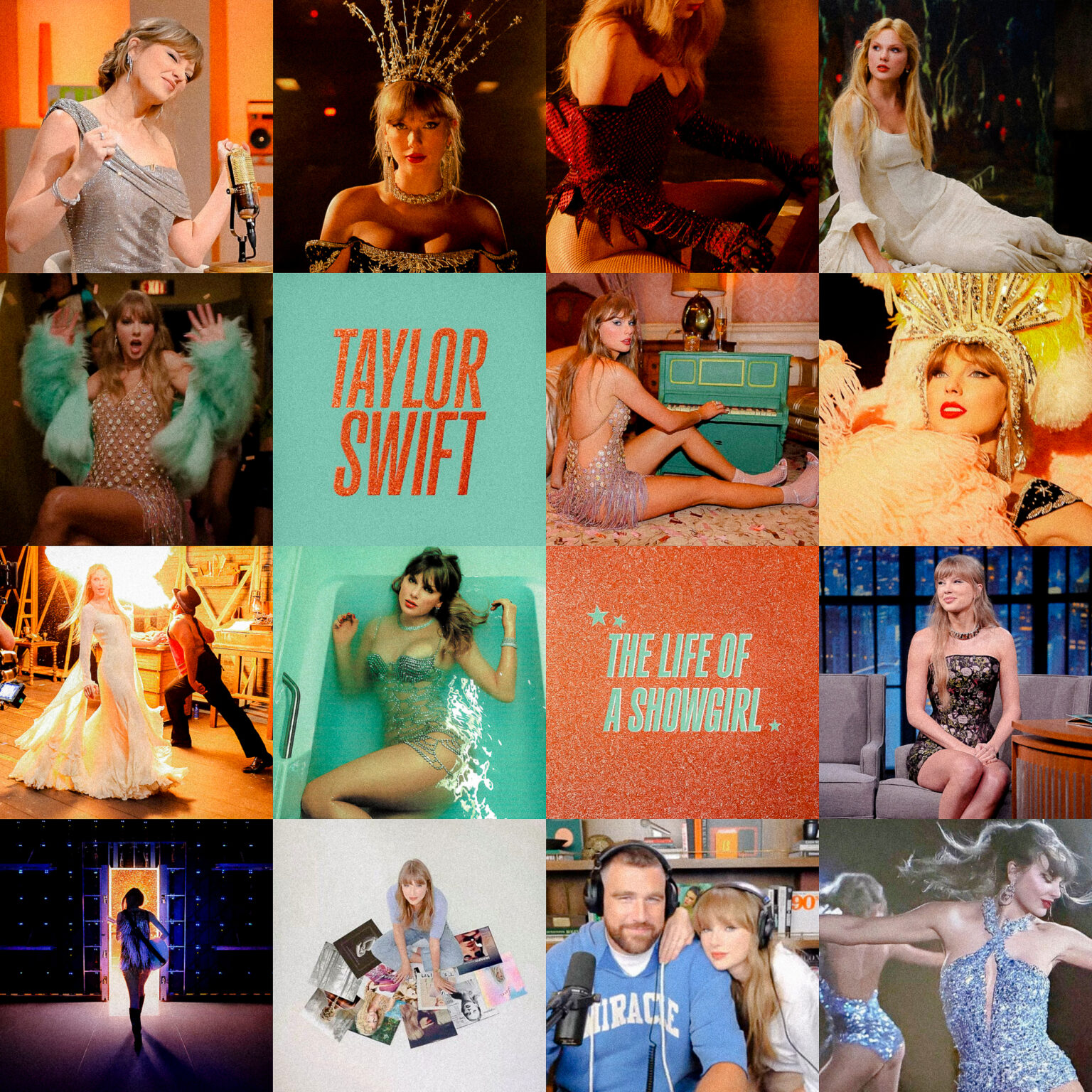
When The Life of a Showgirl strutted out to center stage on October 3, 2025, it arrived with a shimmer of confetti and the seismic force of a cultural holiday, making waves in a way that most artists dream of but that has become the norm for Taylor Swift. The album is a glittering pop jubilee; it’s effervescent, euphoric, and steeped in love and legacy. It celebrates everything from the Eras Tour to the hard-won victory of Ms. Swift reclaiming her masters, wrapping up years of heartbreak into something bright, buoyant, and beautiful.
Where The Tortured Poets Department lingers and ruminates in grayscale melancholy, Showgirl bursts forth in glitzy technicolor, celebrating love, legacy, and her hard-won personal and professional victories. It serves as further proof (not that we needed it) that our girl really can still make the whole place ✨ shimmer ✨.
For parasocially invested fans, seeing Taylor Swift so joyous, engaged, and publicly living her fairy tale feels like a karmic reward. Her unapologetic happiness — a return to bright, pink-glitter-gel-pen-pop — should be universally celebrated. It feels like her most balanced and authentic era yet: confident but not performative, rich but relatable, in love and unbothered. The album itself is romantic, poetic, and sparklingly fun, unburdened by melancholy but imbued with the lightness and wisdom that only hindsight, age, and experience can provide — it’s “depth without darkness,” as Taylor herself described her now-finacé, Travis Kelce, who sat beaming proudly sat her side during the album announcement on his New Heights podcast.
Since anything Taylor Swift does, says, posts, or wears, however, is subject to intense, microscopic scrutiny, her twelfth studio album was not immune to the usual bad faith hypercritical hot takes from social commentators, the general public, performative activists, industry critics, and “rival” fandom sychophants. So the fact that a major Taylor Swift release sparked excessive critiques, overanalyzing think pieces, irrational backlash, and rabid online discourse and hate-fueled engagement farming in its first week on the charts is not particularly surprising.
It’s nothing new, as many longtime fans pointed out.
every single time pic.twitter.com/SEJzjeiRa7
— fan | veronica⸆⸉ (@thisisvertrying) October 27, 2025
The piercing whistle of the regularly scheduled hate train wasn’t the shocking part. Usually, this is easy to tune out. Everyone’s tastes are uniquely attuned to their personality, their life experiences, age, background, culture, etc.; and, in any case, I already expected the vitriol and misogyny (internalized or otherwise) constantly trained on Swift to cloud the judgment of casual listeners who may have fawned over it if it came from literally anyone else.
What was shocking to me about some of the online discourse and dissection, though, was the borderline psychotic nature of some of the reactions we’ve seen in the weeks since the album’s release.
The track “Wi$h Li$t,” for instance, which Taylor described as a utopian daydream about marriage and family with her fiancé Travis Kelce, was bizarrely weaponized. Some commentators framed the song as “MAGA” and “tradwife propaganda,” accusing her of promoting disgusting “conservative values” like wanting to have a family. The willful misinterpreation of the song (and the very sweet and sincere sentiment that’s ultimately behind it) seemed to stem from a twisted and deeply unserious bad faith interpretation of the lyric “got the whole block looking like you,” to mean that Taylor was professing her desire to live in an all-white neighborhood (????).
…. Okay, so, because these individuals made it political, here is where I am going to have to get momentarily “political”; although in this case I consider it more of a general concern for the mental welfare of humanity than purely “politics”.
I have not forgotten how the world reacted to collectively witnessing, almost in real time in crystal clear iPhone camera quality, the heinous public execution of conservative podcaster and grassroots political activist Charlie Kirk. In fact, I’m writing this review while still processing my feelings around the frankly insane, demonic reactions to the political violence that we all saw that day.
Scrolling my social media feeds on September 10th, I saw Swifties, professional Internet trolls, and IRL acquaintances from disparate stages of my life alike all feeling like it was necessary to issue their personal statement as they celebrated the brutal murder of an American civilian whom their political party (and the vast media monolith it controls) collectively decided not only deserved to die but should be mocked in death, his killer praised and glorified, with resounding war cries all around for more bloodshed, with many chanting who they would like to see targeted by the next Luigi Mangione or Tyler Robinson or would-be-assassin Thomas Crooks, and X users as seemingly innocuous as Swifties (one of many reasons I’m reluctant to count myself among them) sharing screenshots and footage from the graphic video to make jokes at the expense of a husband and father who hadn’t been pronounced dead for even an hour when the jokes came flooding onto the airwaves.
Charlie Kirk’s murder has nothing to do with Taylor Swift’s music, yet it somehow feels impossible to separate from my feelings regarding the viral criticisms I’ve seen since The Life of a Showgirl‘s release, given the cultural moment and political climate that the album was born into, because it’s all part of the same overarching cultural trend of ruthless, thoughtless character assassination and actual assassination culture that has gone rabid and spun wildly out of control.
Be it the idiotic backlash asserting that a particular necklace on Taylor Swift’s merch store contained hidden Nazi symbolism, or the snide feedback (that no one asked for) regarding Taylor’s choice to feature her future husband in her upcoming docuseries about the Eras tour, it all speaks to an increasingly widespread and disturbing cultural sickness: we’ve become so polarized that even the most personal, apolitical expressions of desire for domestic happiness are weaponized into ideological battlegrounds. Outrage is currency and, like Taylor purports in “Eldest Daughter”, apathy is hot. The internet has fostered an environment of performative politics where every personal expression is scrutinized for hidden ideological meaning.
For a subset of hyper-liberal commentators, the album’s unabashed celebration of love, domesticity, and family — concepts they have been conditioned to see as adjacent to “conservative values” and therefore evil — was virally interpreted and internalized as somehow radical and offensive.
This performative drawing of battle lines is exhausting and corrosive and only further deepens the “us vs. them” mentality that has made us islands in our own little bubbles of people who agree with us on almost everything, because those bubbles are where it’s comfortable and uncomplicated.
Like Taylor Swift herself said in her New Heights podcast interview, the vastness of the Internet universe and our own personal algorithms means that we can “curate our own reality”. We can choose whose opinions to hear, and whose we can happily wave away and dismiss as patently false, no matter what evidence is presented to the contrary.
In some instances, this can be a wonderful form of escapism equivalent to the secret gardens in our minds that many of us escape to when we Hate It Here.
In other instances, though, it’s a dangerous cultural sickness. We saw this not only in the Charlie Kirk assassination and the ideology that pushed the shooter to act, but in the aftermath of Charlie’s death, during which I witnessed a disturbingly large number of people openly celebrating Charlie’s death, making snide remarks as they danced on his grave, or else quietly signaling their obvious moral superiority by reposting the exact same smug, hollow, and insincere Canva graphic post with the official influencer-approved talking points typed out over an aesthetic grainy gradient background.
Instead of saying nothing – which would have been fine – I saw nothing but false accusations, out-of-context quotes, and cries about how he had it coming, all put forth in order to justify their hatefulness and lack of humanity, and to explain to themselves that their first reaction to the murder of a man that they didn’t know at all was pure, giddy glee.
… How the EFF did we get here, and how do we ever get back to some semblance of normalcy?
The vaguely dystopian problem with our media illiterate populace is that we lack attention spans long enough to verify if information that we are digesting is factually true or taken out of context before we metabolize and internalize it as truth. Most people who were happy that Charlie Kirk was killed (live, onscreen, publicly, while engaging in free speech via open debate) justified their reaction simply on the basis of a stance they disagreed with or one of the same two or three oft-cited controversial quotes from Charlie that I’ve seen ripped out of proper context and stripped of their original meaning and intent. Yet, he became, to deranged, devout political extremists, something less than human; less, even, than a dog that needed to be put down. Misinformation and propaganda travel fast and supplant the truth, and I watched it happen in real time around both a major political assassination and a pop album release. And I only saw outrage and backlash from Swifties when it was Taylor Swift being misinterpreted and maligned … when a man was murdered for his words, on the other hand, many of them were actively celebrating it.
The reality is that Charlie Kirk was (and remains) the subject of a lot of the same scrutiny that often targets Taylor: the media, our friends, or our favorite influencers, all say that so-and-so said such-and-such, and we should hate them, and so many of us do, to the point that ruthless smear campaigns, relentless trolling, blatant lies, bloodlust, and openly celebrating murder have become justifiable and even morally righteous and good.
When rage bait and witch hunts become the default mode of communication, truth, logic, and reasoning become the revolution. Acknowledging the multi-faceted nature and moral gray area that exists in many social and political issues gets you killed. In 2025, a woman in her mid-thirties singing about wanting a family, being publicly happy, and building a loving home on her own terms apparently requires a defense, lest it be mistaken as taking a political “side”.
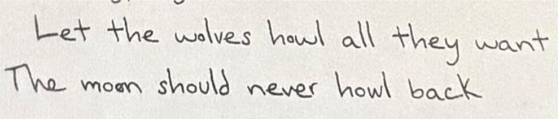
Yet, The Life of a Showgirl persists as a celebration of joy reclaimed. It reminds us that there’s courage in softness, power in sincerity, and a quiet revolution in simply being happy on your own terms. The album refuses to dim its sparkle for anyone’s comfort, and it’s this audacity of unfiltered happiness in an age that mistakes cynicism for sophistication that makes the hypercritical mob so uncomfortable.
It may be hard for some to hear, but Taylor Swift does not owe you an apology, and she definitely does not need to prioritize your feelings or your politics. She wants you to leave her the fuck alone, but you never do.
Wow.